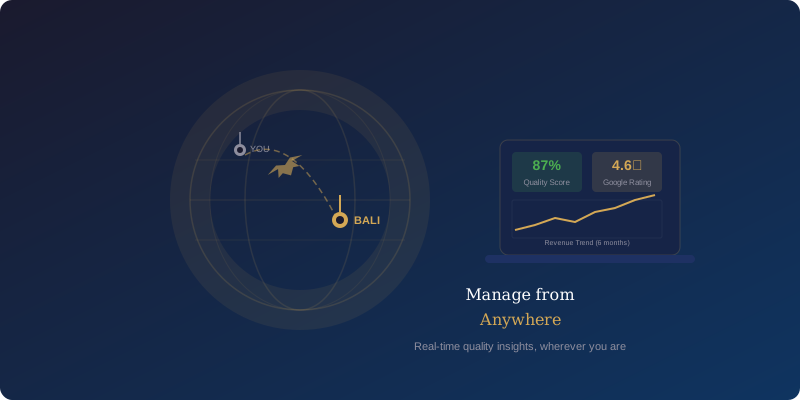
You opened a restaurant in Bali because you fell in love with the island. But your visa runs expire, family obligations call, or you simply need a break from the heat. How do you maintain quality when you're 10,000 kilometers away?
The Reality of Remote F&B Management
Let's be direct: managing a Bali restaurant remotely is one of the hardest things you can do. The time zone difference makes real-time communication difficult. WhatsApp messages get lost. Video calls show you what the camera points at, not what's happening in the corners. And your local manager has their own interpretation of "maintaining standards."
We've spoken with dozens of foreign owners across Bali, and the pattern is remarkably consistent. Month one away: things are fine. Month two: small issues start appearing. Month three: you come back to find that the special sauce tastes different, the new waitress doesn't speak English, and someone rearranged the furniture.
Building Your Remote Control System
Successful absentee owners don't rely on a single mechanism. They build a system with multiple layers:
Layer 1: Daily Operations (Your Manager)
A good local manager is essential, but don't expect them to be you. Give them clear SOPs, checklists, and decision-making authority for day-to-day issues. But understand their limitations: they manage operations, not quality perception.
Layer 2: Financial Monitoring (Your Accountant / POS)
Track daily revenue, average check, food cost percentage, and staff hours remotely through your POS system. Numbers tell you if something is wrong, but not what or why.
Layer 3: Guest Perception (Mystery Shopping)
This is the layer most absentee owners are missing. It answers the question your manager can't: "What does it actually feel like to be a guest at my restaurant right now?"
A monthly mystery visit gives you a 30-point quality snapshot. It's like having your most detail-oriented friend visit your restaurant and write you an honest, structured report.
Layer 4: Online Reputation (Review Monitoring)
Set up Google Alerts and track your TripAdvisor, Google, and Instagram mentions. But remember: by the time a bad review appears, you've already lost that customer and potentially dozens of others who saw the review.
The Cost of Not Monitoring
Let's do some simple math. Say your restaurant does IDR 500 million per month in revenue. A 10% quality drop when you're away (fewer returning guests, lower average check, worse reviews leading to fewer new guests) costs you IDR 50 million per month.
A Professional mystery shopping package costs IDR 4.9 million per month. That's a 10x return even if it prevents just a fraction of that revenue loss.
"The best time to start mystery shopping was before your last trip. The second best time is before your next one."
What to Do Before You Leave
- Set up a mystery shopping program at least one month before departure to establish a baseline score while you're still on-site
- Share the evaluation criteria (but not the visit schedule) with your manager
- Create a simple bonus structure tied to mystery shopping scores
- Schedule a monthly call with your mystery shopping provider to review trends
- Use the reports as conversation starters with your manager, not as ammunition
See your business through your guest's eyes
Book a free pilot mystery visit. No commitment, no credit card required.
Book Free Pilot Visit